
Bitcoin, ETH, XRP Dip Slightly After New U.S. “Genius Act” Stablecoin Regulations

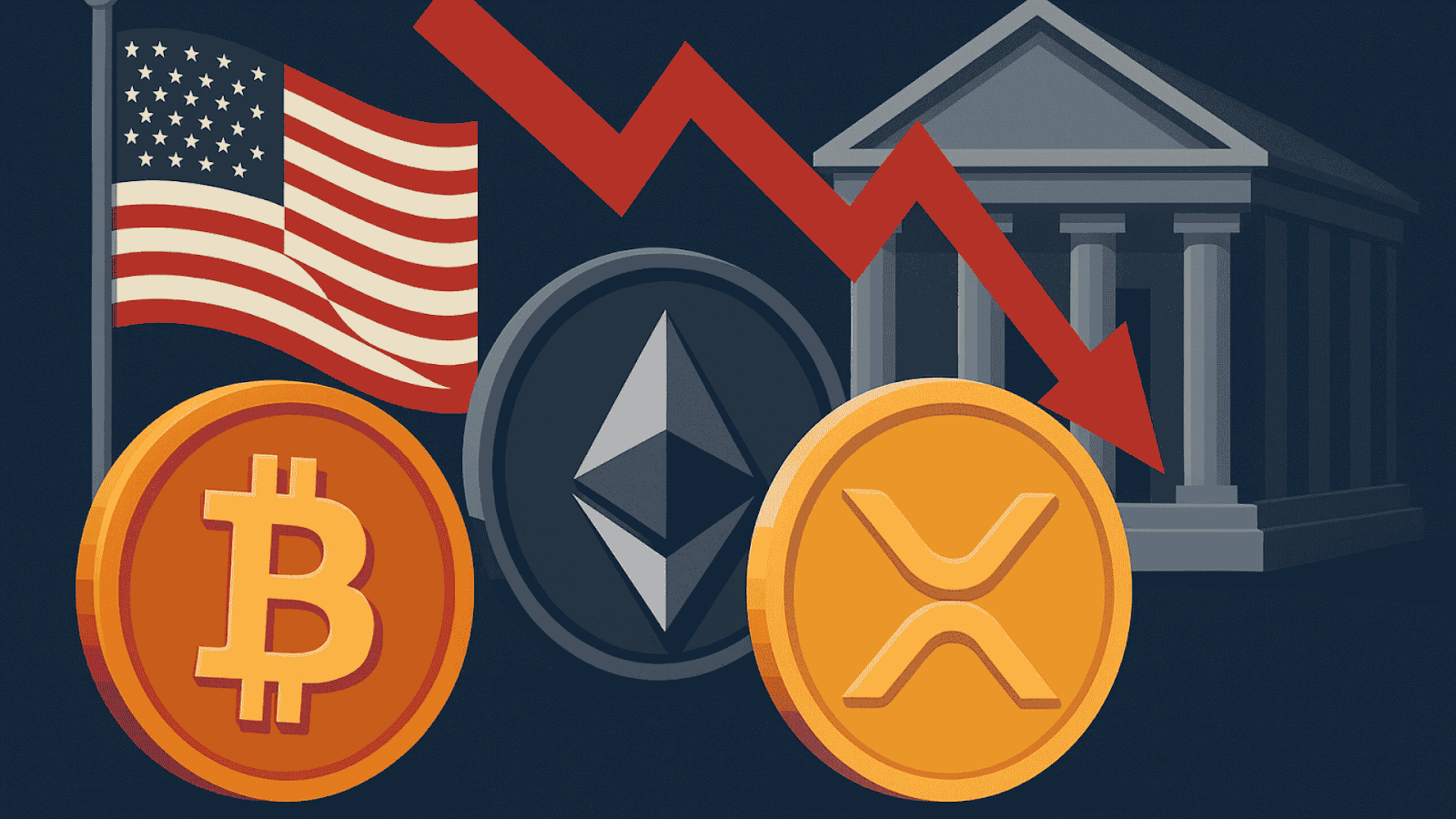
July 22, 2025 — The crypto markets showed a mild but noticeable reaction this week as the United States rolled out new legislation targeting stablecoins under the so-called “Genius Act”. Bitcoin, Ethereum, and XRP all posted modest declines following the news, with investors reassessing regulatory risk amid an otherwise bullish year.
While Bitcoin remains above the critical $118,000 threshold and Ethereum hovers near $3,700, the shift in sentiment reveals how heavily legislation can weigh on digital assets, even in a market that has grown more resilient over time.
The Genius Act: What It Means for Stablecoins
Signed into law on July 21, the Genius Act (Guiding the Establishment of Neutral, Unified Infrastructure for Stablecoins) is designed to bring tighter oversight to U.S. dollar-backed stablecoins. The law requires all issuers to be federally licensed, maintain full 1:1 cash reserves, and submit quarterly attestations verified by government-approved auditors.
Treasury Secretary Monica Raymond called the bill “a pivotal step toward responsible innovation in the digital economy.” The Act establishes the Federal Stablecoin Licensing Board (FSLB), a new entity tasked with reviewing and approving any institution issuing or distributing dollar-based stablecoins in the U.S.
This comes after months of debate, with regulators citing concerns over liquidity risk, depegging events, and opaque reserve practices from some issuers during the 2022–2023 cycles.
Market Response: Mixed but Measured
Following the announcement, Bitcoin slipped around 2.3% to $118,400 before stabilizing, while Ethereum dropped roughly 1.8% to trade at $3,690. XRP, which had recently broken above $0.82, fell back to $0.78 amid broader uncertainty surrounding token classifications and custodial rules.
The reaction, though modest, reflects deeper apprehension around how the U.S. intends to regulate not just stablecoins but the broader infrastructure that powers decentralized finance. Many DeFi protocols rely heavily on stablecoins like USDC, USDT, and newer entrants such as FDUSD for liquidity provisioning, collateral, and yield farming.
Any disruption in stablecoin availability or compliance timelines could have a ripple effect on DeFi TVL (total value locked) and risk models.
Institutional Sentiment and Strategic Shifts
Despite the initial drop, several institutional investors have signaled confidence in the long-term impact of the Genius Act. BlackRock’s Head of Digital Strategy, James Harlow, stated in a post on X that “greater regulatory clarity, even if restrictive in the short term, ultimately creates a more investable environment.”
Vanguard and Franklin Templeton also issued neutral-to-positive notes to clients, suggesting that compliance with the new framework may create stronger demand for regulated stablecoin products — particularly those backed by U.S. Treasuries.
This aligns with the recent rise of tokenized T-bills and cash-equivalent products, which are gaining traction as DeFi-native alternatives to conventional stablecoins.
The Ripple Factor: XRP’s Unique Position
XRP’s pullback was slightly sharper than Bitcoin or Ethereum, largely due to lingering ambiguity over its status in the U.S. While Ripple Labs won partial victories in its case against the SEC in 2023, the agency has continued its scrutiny under the broader securities umbrella.
The Genius Act does not clarify XRP’s regulatory treatment directly, but legal analysts note that enhanced KYC/AML obligations for stablecoin issuers may put added pressure on platforms that trade or custody XRP for U.S. users.
Still, Ripple CEO Brad Garlinghouse said in a July 21 interview that the company supports “a unified framework for digital dollars” and views the Act as a “step forward” in fostering institutional trust.
Stablecoin Issuers: Compliance or Exit?
Circle, the company behind USDC, responded swiftly, confirming that it will apply for FSLB licensing and publish monthly reserve audits moving forward. Tether, on the other hand, has yet to issue a statement — a silence that is already fueling speculation about its future standing in U.S. markets.
Smaller or offshore stablecoins may choose to geo-fence U.S. users or withdraw from American exchanges entirely rather than comply with the new licensing rules. Analysts warn this could shrink stablecoin liquidity in U.S.-regulated DeFi platforms in the short term.
Outlook: Regulation as Catalyst or Constraint?
The Genius Act’s passage is a milestone, no doubt. But whether it marks the beginning of a more stable crypto era or the return of regulatory overreach will depend on implementation. If licensing processes are clear and timelines reasonable, many expect the Act to spur a new wave of trusted, transparent stablecoin projects.
If red tape delays approvals or shuts out innovation, however, the U.S. may find itself outpaced by regions like the UAE and Singapore, where frameworks are already live and more adaptive.
For now, the market’s response suggests cautious optimism. Price action remains within key technical ranges, and volatility is low compared to previous regulation-driven shakeouts. But sentiment is fragile — and as always in crypto, clarity is gold.

Anna Dovzhenko is a skilled PR and advertising professional with a strong focus on content strategy and brand communication. With a keen eye for storytelling and a deep understanding of audience engagement, Anna specializes in crafting compelling content that builds brand identity and drives results. Her expertise spans media relations, digital campaigns, and content development, making her a valuable asset in any marketing or communications team.
More from this author

Comments 0 responses